
Routledge: Abingdon, Oxfordshire, UK, 2016
£29.99 ($4.95) paperback; £28.49 ($36.04) Kindle edition £110 ($180) hardcover.
This book was inspired by the author's archive of the (UK) Consumers’ Association magazine, Which? This magazine, and the more recent Which? website, provide a unique written and visual record of the technological and design evolution of consumer products marketed in Britain from 1957 to the present.
The core of the book comprises case studies of six classes of mechanical, electro-mechanical, electrical and electronic consumer products – bicycles, washing machines, vacuum cleaners, electric lamps, television equipment and mobile (cell) phones.
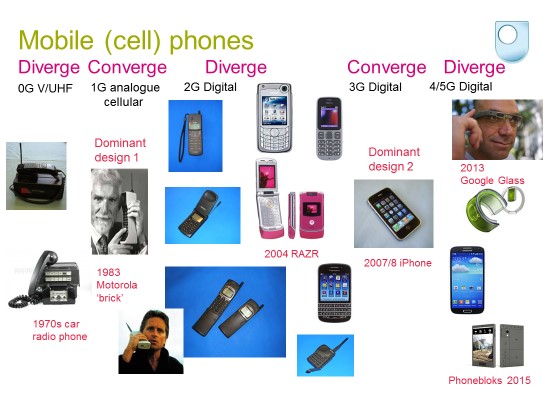
The case studies draw upon the reports in Which? plus many other print, online, museum and retail sources to track the technological innovation and design evolution of these products from their initial inventions to the present day. The case studies also examine when, why and how environmental criteria, such as improved energy and materials efficiency, became part of the design specification of these product classes; the influence of social, economic and cultural factors on their innovation and design; and the profound impacts of these products on society and the environment.
The book draws on empirical evidence from the product case studies to provide general conclusions about patterns of technological innovation and design evolution and compares these conclusions with existing theories. The book finishes by making use of the evidence of the case studies to provide practical guidelines and lessons for product designers, engineers, managers and marketers and for educators of these professions.
http://oro.open.ac.uk/44872/ (This link provides an extended abstract plus summaries of all the book’s chapters.)
http://www.routledge.com/products/9780415869980 (This link offers access to the book’s contents list etc.)